Apr 06

Planning for Our Water Future: Upcoming GMA 12 Vote

Posted on April 6, 2026 at 9:43 AM by Claire Marks

Planning for Our Water Future: Upcoming GMA 12 Vote

Public meeting with presenter pointing at charts; GMA 12 meetings April 16 and 27, 10 AM, Milano, TX

Later this month, Groundwater Management Area 12 (GMA 12) will hold a vote on proposed Desired Future Conditions (DFCs) for the aquifers that supply water to our region. This vote is expected to take place at either the April 16 or April 27 GMA 12 meeting. Meetings are open to the public and take place at 10:00 AM at the Post Oak Savannah Groundwater Conservation District, 310 Avenue C, Milano, TX (https://posgcd.org/gma12/).

So what does that mean for you? In Texas, groundwater is managed locally, but planning happens regionally through a process established under Chapter 36 of the Texas Water Code. Groundwater Conservation Districts (GCDs) within a shared region, like GMA 12, come together to plan for the long-term future of our aquifers. The GMA 12 is made up of five districts: Brazos Valley GCD; Fayette County GCD; Lost Pines GCD; Mid-East Texas GCD; and, Post Oak Savannah GCD.

Every five years, these five districts engage in a joint groundwater planning process to define DFCs, which are essentially our shared metrics for what we want our aquifers to look like in the future. These conditions may describe water levels, spring flows, or available groundwater over a 50-year planning horizon.

This process is science-based and considers a wide range of factors, including:

  1. Aquifer uses and conditions;
  2. Water supply needs and water management strategies;
  3. Hydrological conditions for each aquifer including recoverable storage, recharge, inflows, and discharge;
  4. Environmental impacts likes impacts on spring flow and interactions between groundwater and surface water;
  5. Impact on subsidence;
  6. Socioeconomic impacts;
  7. Impact on private property rights;
  8. Feasibility of achieving the DFCs;
  9. Any other relevant information.

All of this work leads up to the proposed DFC vote later this month at the GMA 12 meeting. In order to establish the proposed DFCs, the vote must pass by a supermajority, meaning at least four of the five districts must vote in favor.

What Happens After the Proposed DFC Vote?

Once GMA 12 approves the proposed DFCs, the process moves into an important next step: public input. The proposed DFC vote triggers a 90-day public comment period, during which each of the five Groundwater Conservation District, including Lost Pines GCD, will hold a public hearing. Notice of these hearings will be provided to the public. Residents, landowners, and stakeholders will have the opportunity to learn more and provide feedback. This is a key opportunity for the community to be part of shaping how groundwater is managed for future generations.

Why It Matters

Here in Bastrop and Lee counties, we rely 100 percent on groundwater for our water supply. The decisions made through this process directly influence how we balance growth, water use, and long-term sustainability. The DFCs we set today help answer an important question: What do we want our aquifers to look like in 50 years? Your voice plays a role in that answer. As the public comment period begins, we encourage you to stay informed, attend a hearing, and be part of the conversation about the future of groundwater in our region.

Mar 25

Spring Is Well Check Season: Join Our Well Watch Program

Posted on March 25, 2026 at 11:14 AM by Claire Marks

Spring Is Well Check Season: Join Our Well Watch Program

Graphic promoting Spring Well Check Season and the Well Watch Program with phone number 5123605088

It’s that time of year… well check season!

As part of our Well Watch Program, Lost Pines Groundwater Conservation District measures participating wells twice a year, once in the spring and once in the fall, to track groundwater levels across Bastrop and Lee Counties. 

Are you signed up?

If you are already part of the Well Watch Program, LPGCD staff will be reaching out between April and May to schedule a time for our hydrologist to measure your water level.

The Well Watch Program is voluntary and free of charge. By allowing us to measure the static water level in your well, you are contributing valuable data that helps guide long-term groundwater planning and management in our region.

Call our office today at (512) 360-5088 to sign up or learn more, or visit www.lostpineswater.org/165/Well-Watch-Program.

Your well matters. Your participation matters. Groundwater is a shared resource and a shared responsibility.


Mar 25

Spring Into Water Conservation
Posted on March 25, 2026 at 11:11 AM by Claire Marks

Spring Into Water Conservation

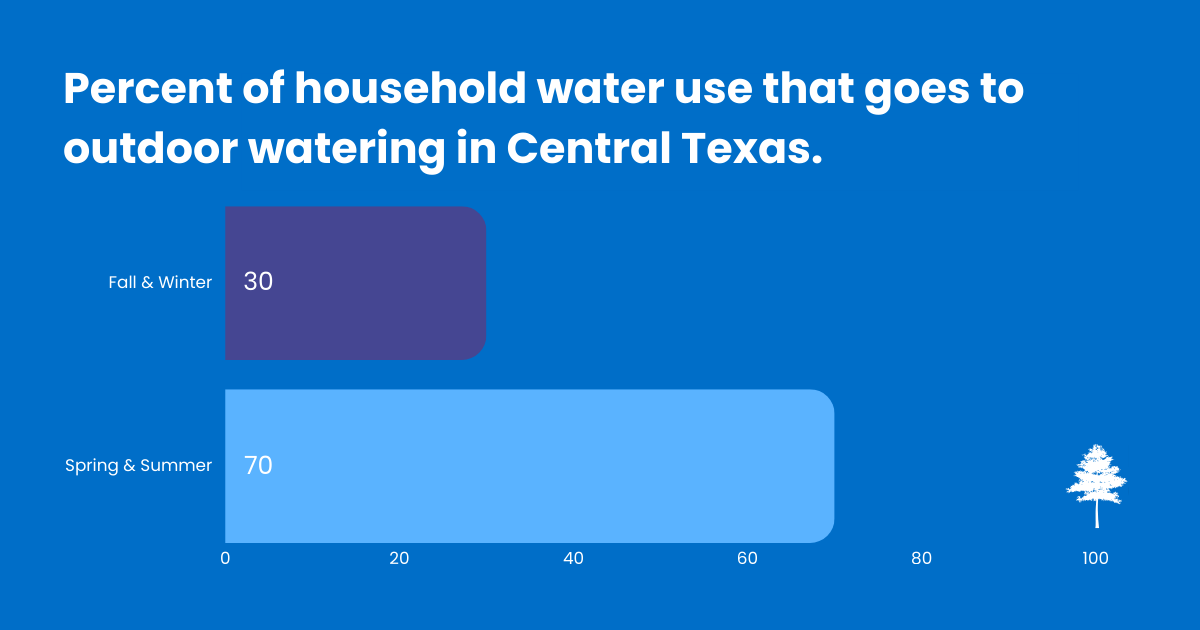
Chart showing outdoor water use: 30% in fall and winter and 70% in spring and summer in Central TX

Spring has arrived in Central Texas. The first day of spring was March 20, bringing warmer temperatures, longer days, and new growth across Bastrop and Lee counties. As plants begin to bloom and landscapes turn green again, it is also a great time to think about water conservation.

Here in Bastrop and Lee counties, we rely entirely on groundwater for our municipal water supply. Here in Central Texas dry times are becoming more frequent and longer. This means that in these dry times saving water where we can is crucial to a reliable water system. Small changes add up across thousands of homes, reducing water demand during the hotter spring and summer months when water use typically increases. 

For example, here in Central Texas, about 30 to 50 percent of household water use goes toward outdoor watering. But when temperatures rise, that number can jump up to almost 70 percent. On top of that, experts estimate that about half of the water used outdoors is wasted due to evaporation, wind, or runoff caused by overwatering. Therefore, addressing your outdoor water use is a simple way to help save water and reduce water waste. 

Want to reduce your outdoor water use? Here are three simple things you can do today. First, start watering early in the morning. This allows more moisture to soak into the soil before the heat of the day causes evaporation. Second, check your irrigation systems for leaks, broken sprinkler heads, overspraying, or watering the sidewalk instead of your lawn. This can prevent unnecessary water loss.

Another way you can reduce outdoor water use is by capturing rainfall. Rainwater harvesting systems collect rain from rooftops and store it in barrels or tanks for later use. This stored water can be used for gardens, landscaping, and other outdoor needs, helping reduce demand on groundwater supplies. 

Did you know that 1 inch of rainfall produces 0.62 gallons of water for every 1 square foot of roof or catchment area? This means a homeowner could collect roughly 620 gallons of water from a 1,000-square-foot roof from a 1-inch rain. That’s a lot of water for your garden, just from 1-inch of rain!

To help residents learn more about rainwater harvesting, Lost Pines Groundwater Conservation District (LPGCD) will host a Rainwater Harvesting 101 workshop on April 20 from 6:00 to 8:00 PM at the Lee County AgriLife Extension Office in Giddings. The workshop will cover the basics of rainwater collection systems and how they work. We also will  be giving away a door prize of a 150-gallon barrel courtesy of Innovative Water Solutions.

LPGCD also offers a Rainwater Harvesting Rebate Program that helps offset the cost of installing rainwater storage systems. Through this program, residents may qualify for a rebate based on the amount of storage capacity installed, $1 for every one gallon of storage capacity up to 5,000 gallons.

Water conservation does not require major lifestyle changes or complicated systems. Often, it starts with simple everyday actions like fixing leaks and being mindful about outdoor watering. As spring continues and we look ahead to the warmer months, it is a good reminder that the water beneath our feet is a shared resource. The choices we make today play a role in protecting our aquifers and supporting the communities that depend on them.

This season, we invite you to join us in springing into water conservation.

For more information about groundwater, district programs, or upcoming workshops, visit www.lostpineswater.org or call (512) 360-5088.